
On the Mic - Three Commentators Explain What Makes a Pinball Broadcast Work
A pinball stream already shows the score. It shows every flip, every drain and every celebration. So what exactly is a commentator adding?
Three commentators - Tyler Dipper, Josh and Ashley Burke - were asked the same eight questions about the craft of commentary. Their answers weren't identical.
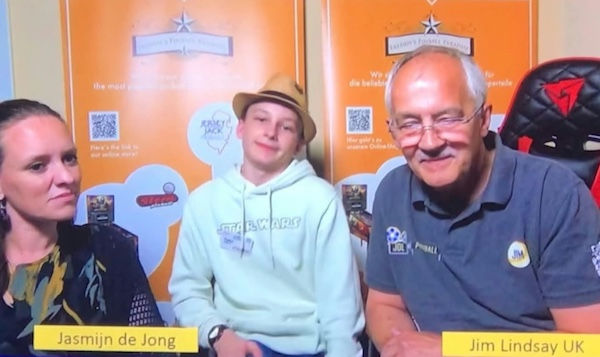
Tyler Dipper (middle) co-commentating as a guest at the 2023 World Championships in Germany, on the JDL Pinball stream.
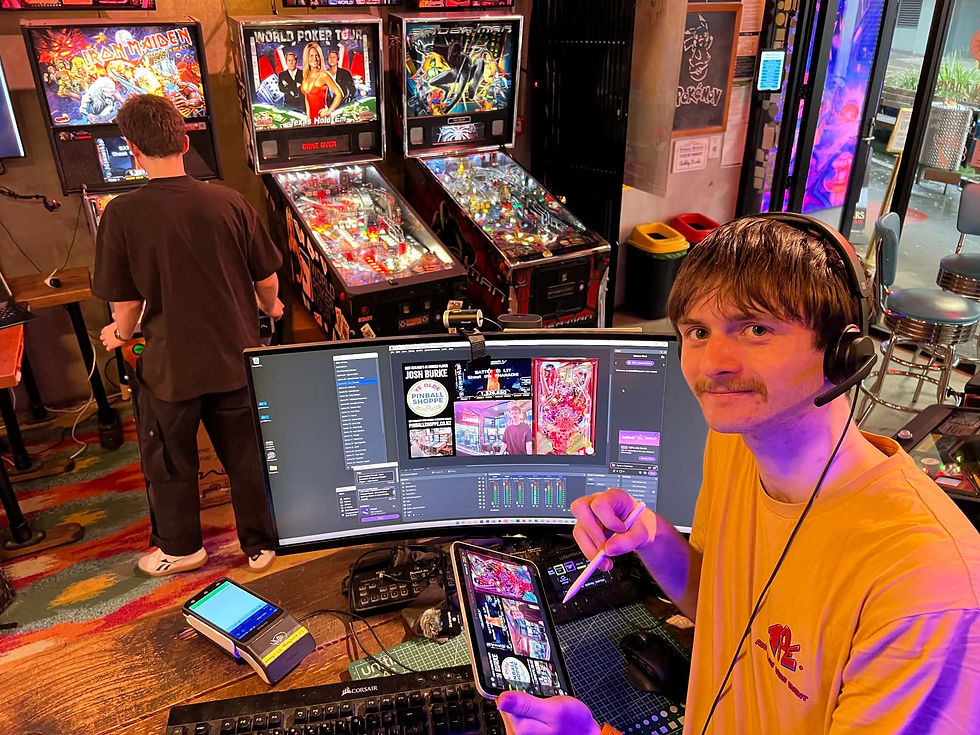
At Ye Olde Pinball Shoppe - Josh Burke commentating on Ashley's Iron Maiden game.
More than describing what's happening
The first question was simple: what's the role of a pinball commentator? Tyler's answer focused on explaining the game to viewers. It's to give an educational role to the viewers - to tell them what's going on, what is happening, what this person will be doing." For him, commentary means explaining consequences as much as actions. If someone misses a shot, viewers should understand what that changes.
Josh emphasised keeping viewers engaged.
Ashley described commentary as the bridge between gameplay and the audience. "The commentator comes in and adds context and a bit of a story to tell for the person to continue to stay engaged." Although they emphasised different things, none of them described commentary as simply reading out what viewers could already see.
Why game knowledge matters
Every interview came back to game knowledge.
Tyler was direct. "If you don't know how to play the game and you're just commentating on what flipper skills they're doing, you are out of things to talk about within, like, 20 seconds." He remembered commentating on Winchester Mystery House at the Brisbane Masters - a game he'd never played. Rather than pretending to be an expert, he let other commentators explain the rules while he focused on scores, match situations and what players needed to achieve.
Josh said: "Even if they don't [know everything], it's fine. But as long as I see the passion there."
Ashley added a practical distinction: commentators shouldn't assume viewers already understand the playfield, and using the telestrator [drawing on screen] can make it much easier to follow.
Deciding what deserves attention
Knowing the rules isn't the same as explaining all of them.
Josh explains that he usually gives a brief overview at the start of a game before adding more detail as play unfolds, drawing on what he described as "a pretty good grasp of all the rules."
Tyler described almost the same process as a "priority list" - a mental order of the shots and objectives that matter most at any given moment. "A hurry-up starts, then that takes priority." Without understanding those priorities, he argued, commentators can accidentally misread what they're watching.
"There may be a multiball lit, and you keep saying, 'Hit the multiball, hit the multiball, hit the multiball.' But if you don't know what the rules of the game are, you don't understand that they're trying to combine it with a mode and a playfield multiplier."
Ashley pointed to another common mistake. "There are times when people basically just read off the entire rules sheet." Instead, he prefers explaining the shots that matter at that moment so viewers understand the player's objective without hearing every rule in the game.
Don't lose the game
One topic that came up was what commentators deliberately avoid talking about during a broadcast.
"People don't want to hear a whole conversation about your lunch."
For Tyler, that didn't mean stripping personality out of commentary. Mentioning something happening around the venue was fine - as long as the focus quickly returned to the game. Ashley recognised the same idea, saying he'd heard people make similar comments about spending too long talking about the food truck at a venue.
Ashley raised another topic he tries to avoid: talking about a game he's just played in the same tournament. "Especially if it didn't go well." He said there's a difference between using a previous game to explain a machine and dwelling on a loss. As he put it, when commentators "start going on about their previous games, and especially when they didn't go well," it's time to move the focus back to the match on stream.
Josh summed up his reaction with a laugh. "Out of the booth, buddy."
Critiquing without shaming
Tyler argued that when a player makes an unexpected decision, the commentator's job is to explain what they're likely trying to achieve rather than simply asking, "Why are they shooting that?"
Ashley described approaching it differently depending on who was playing. During Multiball Maidens, he said he wouldn't shame anyone. During Pōneke Pinballers finals, he'll joke with players he knows well about missed opportunities but never in a genuinely mean-spirited way.
Why tournament pinball looks easier than it is
All three wanted viewers to understand that tournament pinball isn't the same as casual play.
Josh pointed to machine setup. "Every game's different." Tournament machines play differently enough that viewers often underestimate how difficult they are.
Ashley argued that elite players aren't eliminating randomness. "It's about reducing as much randomness and controlling as much as you can."
Tyler used Star Wars as an example of how differently competition can feel from casual play. During Matariki weekend, he said he "couldn't even put up 200 million" in competition. Later, on the same game at Timezone, he scored 22 billion, adding that he regularly scores billions at home. He compared that pressure to a competitive Rubik's Cube solver who produced a world-record pace during warm-up before performing much slower once the official attempt began.
Why two commentators often work better than one
None of the three preferred working alone.
Josh liked the back-and-forth. "They can riff off each other." He remembered streaming John Wick in Australia with another commentator who knew the rules inside and out while Josh asked the questions viewers were likely wondering themselves.
Ashley compared that relationship to early Rick and Morty. One person asks the obvious questions. The other answers them.
Tyler described something similar happening during Jurassic Park at Brisbane Masters. He explained the rules. The game's owner explained how that particular machine actually played.
Commentary changes the commentator too
Commentary doesn't just help viewers understand pinball. It changes the commentator's understanding too.
Ashley compared it to writing an essay. Explaining something clearly forces you to understand it more deeply.
Josh described learning from watching other players. "You genuinely play like who you watch."
Ashley laughed that he'd started attempting tap passes after watching enough streams - even though they weren't working yet.
Tyler changed his own Godzilla strategy after noticing elite players repeatedly choosing Megalon.
Keeping viewers invested
The interviews eventually widened beyond commentary itself and into streaming.
Josh described the mental shift between competing and commentating. "It's always hard to play and talk."
Ashley said broadcasts work best when they give viewers someone to invest in, pointing to finals where an underdog story helps people understand what's at stake.
The conversation turned to the YOPS Twitch stream, Open Broadcasting Software, archiving tournaments and encouraging more people to try commentating. One production idea was a dedicated commentator camera, so viewers can see who's speaking as the conversation unfolds.
A common thread was making broadcasts easier to follow. Whether through clearer explanations, telestration or better stream layouts, each described ways to help viewers follow the game.
What they hope viewers take away
The final question was what they hoped someone would leave with after watching a broadcast.
For Josh, the ideal reaction was watching a stream, wanting to play that game immediately, and trying what he'd just learned.
Tyler hoped every broadcast taught something - whether that was a new strategy for someone watching live or a lesson for the player watching their own game back.
Ashley hoped viewers would become invested in the tournament - following the players, understanding the format, and wanting to see who came out on top.
Give it a go
YOPS tournaments are streamed live on the Pinball Shop Twitch channel, and the team is keen to keep growing the commentary side of the community.
Feel like giving commentary a go? Chat to Hamish or Ashley at the next tournament - they'd love to get more people involved.


Comments